
No products in the cart.
Consultation
5 Signs You May Need an Asian Head Massage
Head pressure after a long day, a stiff neck after hours at a laptop, or the feeling that your mind simply will not switch off can be easy to dismiss. Yet these small signs often appear together. For stressed professionals, travelers, and anyone carrying tension around the scalp, temples, neck, or shoulders, an Asian Head Massage can offer a calm, focused way to slow down and release everyday muscular tightness.
This guide explains five common signs that may suggest it is time to consider an Asian Head Massage, what the treatment usually focuses on, what you can realistically expect, and when massage should not be your first step. The goal is not to present massage as a cure for headaches or medical conditions. Instead, it is to help you recognize ordinary patterns of stress and tension, make informed wellness choices, and know when symptoms deserve medical attention.
What Is an Asian Head Massage and Why Do People Choose It?
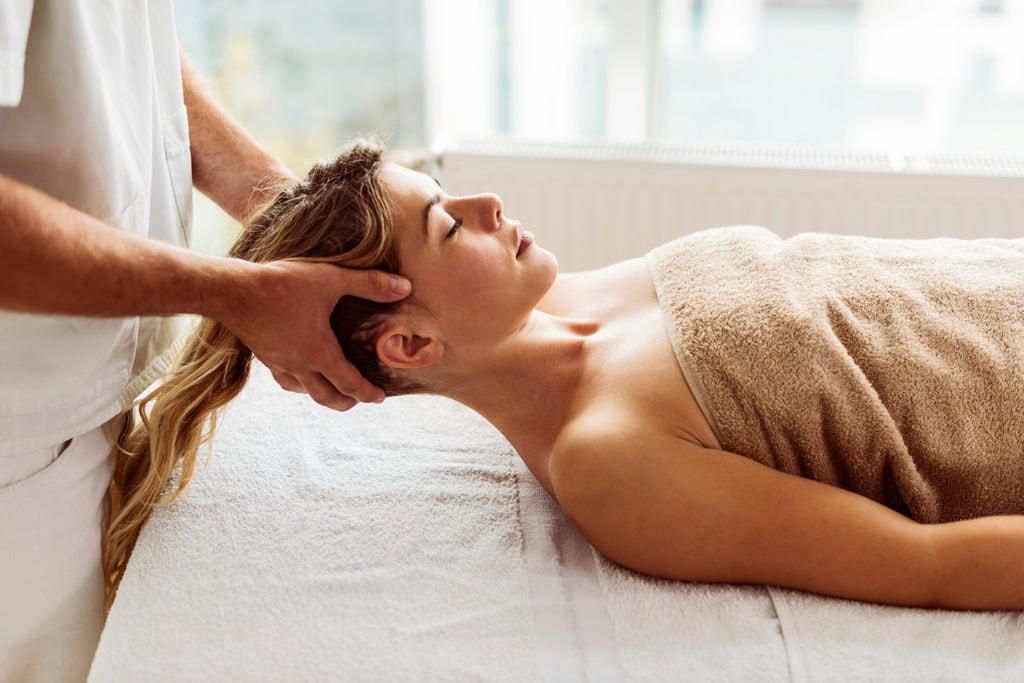
An Asian Head Massage is a wellness-focused treatment centered on areas that commonly feel tense after stress, screen use, driving, travel, or long periods in one position. Depending on the spa and the therapist’s approach, it may include gentle to moderate pressure, scalp work, slow kneading, circular movements, and attention to the neck, temples, upper shoulders, or base of the skull.
The term Asian Head Massage is broad. Different traditions across Asia have developed their own head and scalp practices, so there is no single universal sequence. Some sessions are performed with the client lying down, while others may be partly seated. Some use oil, while others can be performed without it. A professional treatment should always be adapted to comfort, pressure preference, scalp sensitivity, and relevant health information.
What does an Asian Head Massage usually focus on?
The treatment is typically chosen because it offers concentrated attention to a relatively small but tension-prone area. Rather than working the full body, an Asian Head Massage can place more time on the scalp, temples, neck, and shoulders. For someone who spends most of the day at a computer, carries a backpack through airports, drives for hours, or notices the shoulders rising during stressful moments, this focused format can feel particularly relevant.
What benefits are realistic?
People often choose an Asian Head Massage to relax, feel less physically wound up, and enjoy short-term relief from ordinary muscular tightness. Massage may also provide a useful mental break from screens, noise, and constant task switching. That combination can be valuable when stress is showing up as a clenched jaw, raised shoulders, a tight-feeling scalp, or a neck that feels tired by the end of the day.
It is important to keep expectations evidence-based. Direct high-quality clinical evidence for Indian head massage specifically as a treatment for chronic tension-type headache has historically been limited, and a clinical evidence review found no randomized controlled trials for that specific intervention. That does not mean an Asian Head Massage cannot feel relaxing or help with everyday tension. It means the treatment should not be marketed as a proven cure for chronic headache disorders.
5 Signs You May Need an Asian Head Massage

You do not need to wait until you feel completely exhausted before booking an Asian Head Massage. In many cases, the most useful time to consider a relaxation session is when you begin noticing repeated patterns. The following five signs are not diagnoses. They are practical cues that your head, neck, and shoulders may be carrying more tension than usual.
1. Your scalp, temples, or forehead often feel tight after work
One of the clearest reasons people explore an Asian Head Massage is a tight, compressed feeling around the scalp or temples after concentrated work. You may notice yourself rubbing your forehead between meetings, pressing your fingers into your temples, or massaging the base of your skull without even thinking about it. These habits can be simple signals that your body is asking for a break.
If this sensation appears mainly after busy workdays and improves with rest, stretching, movement, or relaxation, an Asian Head Massage may fit well within a general wellness routine. If head pain is frequent, worsening, unusually severe, or different from your normal pattern, however, it should be assessed by a healthcare professional rather than assumed to be simple tension.
2. Your neck and shoulders feel stiff after screens, driving, or travel
Neck and shoulder stiffness is another common reason to consider an Asian Head Massage. Hours spent looking at a laptop, checking a phone, sitting in a car, or waiting in airports can leave you feeling rigid through the upper body. Cleveland Clinic notes that straining the neck to view a computer screen for long periods can contribute to neck pain, while stress can also lead people to tighten neck muscles without realizing it.
Travelers can notice this type of stiffness after long flights or extended time carrying luggage. Professionals may notice it late in the afternoon, especially if the monitor is too low or the body stays in one position for hours. If the discomfort is mild and muscular, an Asian Head Massage can offer a relaxing reset. If neck pain follows an injury, causes numbness or weakness, or feels severe, seek medical advice before massage.
3. Stress is showing up physically around your jaw, head, or upper body
Stress is not only a mental experience. Many people notice it physically through jaw clenching, tight shoulders, a tense scalp, shallow breathing, or a restless feeling that continues even after work has ended. When these patterns repeat, an Asian Head Massage can provide a structured pause that shifts attention away from tasks and toward physical relaxation.
You might benefit from an Asian Head Massage if you frequently catch yourself lifting your shoulders, pressing your tongue against your teeth, holding your breath while reading emails, or rubbing the back of your neck during stressful conversations. None of these habits automatically indicate a medical problem, but together they can make the end of the day feel heavier than it needs to.
If stress is persistent, affecting sleep, mood, work, or daily functioning, massage should be considered one supportive wellness tool rather than the only strategy. Movement, social support, time away from screens, healthy sleep habits, and professional mental health support when appropriate can all play important roles.
4. You find it difficult to mentally switch off
Some people finish work physically tired but mentally alert. Thoughts continue moving, messages remain unanswered, and the brain seems to keep running through tomorrow’s tasks. An Asian Head Massage may appeal in this situation because the treatment is simple, sensory, and focused. You do not have to perform, solve anything, or stare at another screen.
It is worth noting that massage is not a treatment for insomnia or anxiety disorders. If difficulty sleeping or persistent anxiety is affecting your health, speak with a qualified healthcare professional. The role of an Asian Head Massage is better understood as relaxation support within a broader self-care plan.
5. You keep instinctively massaging your own temples, scalp, or neck
People often give themselves useful clues through small repeated behaviors. If you regularly press your temples, rub your scalp, squeeze the top of your shoulders, or ask someone to massage the base of your neck, you may already know which areas are asking for attention. An Asian Head Massage simply provides a more intentional and professionally delivered version of that focused care.
This sign is especially relevant when the behavior appears after predictable triggers such as long meetings, extensive screen use, driving, flights, or emotionally demanding days. If you notice the same pattern several times each week, it may be worth scheduling an Asian Head Massage before the tension builds into a stronger feeling of fatigue.
| Common sign | What may be contributing | How to respond |
|---|---|---|
| Tight scalp or temples | Concentration, jaw tension, stress | Take movement breaks, relax the jaw, consider an Asian Head Massage |
| Stiff neck and shoulders | Screen position, driving, long sitting | Review ergonomics, move regularly, consider head and neck massage |
| Physical stress habits | Raised shoulders, clenching, shallow breathing | Use stress-management habits and schedule relaxation time |
| Difficulty switching off | Mental overload, travel, constant notifications | Create a wind-down routine and reduce screen stimulation |
| Frequent self-massage | Recurring local tension | Notice triggers and consider a professional Asian Head Massage |
If two or more of these signs sound familiar, that does not mean you medically need massage. It simply means an Asian Head Massage may be a reasonable wellness option to explore. A session can be particularly timely when you are visiting Paphos and want to recover from travel, or when a busy work period has left your head and neck feeling persistently tense.
Why Stress, Screens, and Travel Can Build Head and Neck Tension

An Asian Head Massage can feel especially relevant today because many daily routines keep the head and upper body in relatively fixed positions. Work happens on laptops. Breaks happen on phones. Travel involves sitting in planes, cars, buses, and airport lounges. Even leisure can involve several more hours looking downward at a screen.
Desk work and screen habits
There is no single perfect posture that guarantees a pain-free body, but long periods without movement can contribute to discomfort. Cleveland Clinic notes that screen positioning and prolonged computer use can contribute to neck strain, and its ergonomics guidance emphasizes adjusting the workstation and getting up to move regularly.
If your workday involves several hours at a desk, an Asian Head Massage should not replace basic ergonomic improvements. Raise a low monitor, keep frequently used items within comfortable reach, change position often, and take short movement breaks. When those habits are paired with an occasional Asian Head Massage, the massage becomes part of a more complete tension-management routine rather than a temporary fix for a workstation problem that never changes.
Digital eye strain can also come with soreness around the eyes as well as stiffness through the neck and shoulders. Cleveland Clinic lists neck, shoulder, and back discomfort among symptoms that may accompany prolonged digital device use. This is another reason people may experience the head, eyes, neck, and shoulders as one connected area of fatigue after a screen-heavy day.
Learn more: NCCIH – Massage Therapy: What You Need To Know
Travel and long periods of sitting
Travel creates a different pattern. You may sleep in an unusual position, carry bags on one side, look down at your phone while waiting, sit with limited space, and arrive with a disrupted routine. None of this automatically requires treatment, but it can leave the upper body feeling compressed and tired.
If you have just completed a long flight, tell the therapist about any health conditions, recent procedures, injuries, swelling, unusual pain, or medications that may be relevant. For some travelers, medical factors can make certain forms of massage inappropriate. A professional spa should be willing to modify or postpone an Asian Head Massage when safety comes first.
Stress can change how you hold your body
Mental pressure can influence physical habits. You may tighten the jaw while reading a difficult message, brace the shoulders during a deadline, or keep the head rigid while concentrating. Over time, these habits can make the scalp, neck, and shoulders feel busy even when you are sitting still.
This is why the best results from an Asian Head Massage are often supported by ordinary daily habits. Move regularly. Let your shoulders drop. Alternate tasks. Look away from the screen. Avoid holding your phone between your shoulder and ear. Give your eyes and mind short breaks. Massage can create relief and relaxation, while daily behavior helps reduce the repeated triggers that bring tension back.
What to Expect From an Asian Head Massage and When to Pause
Before the session
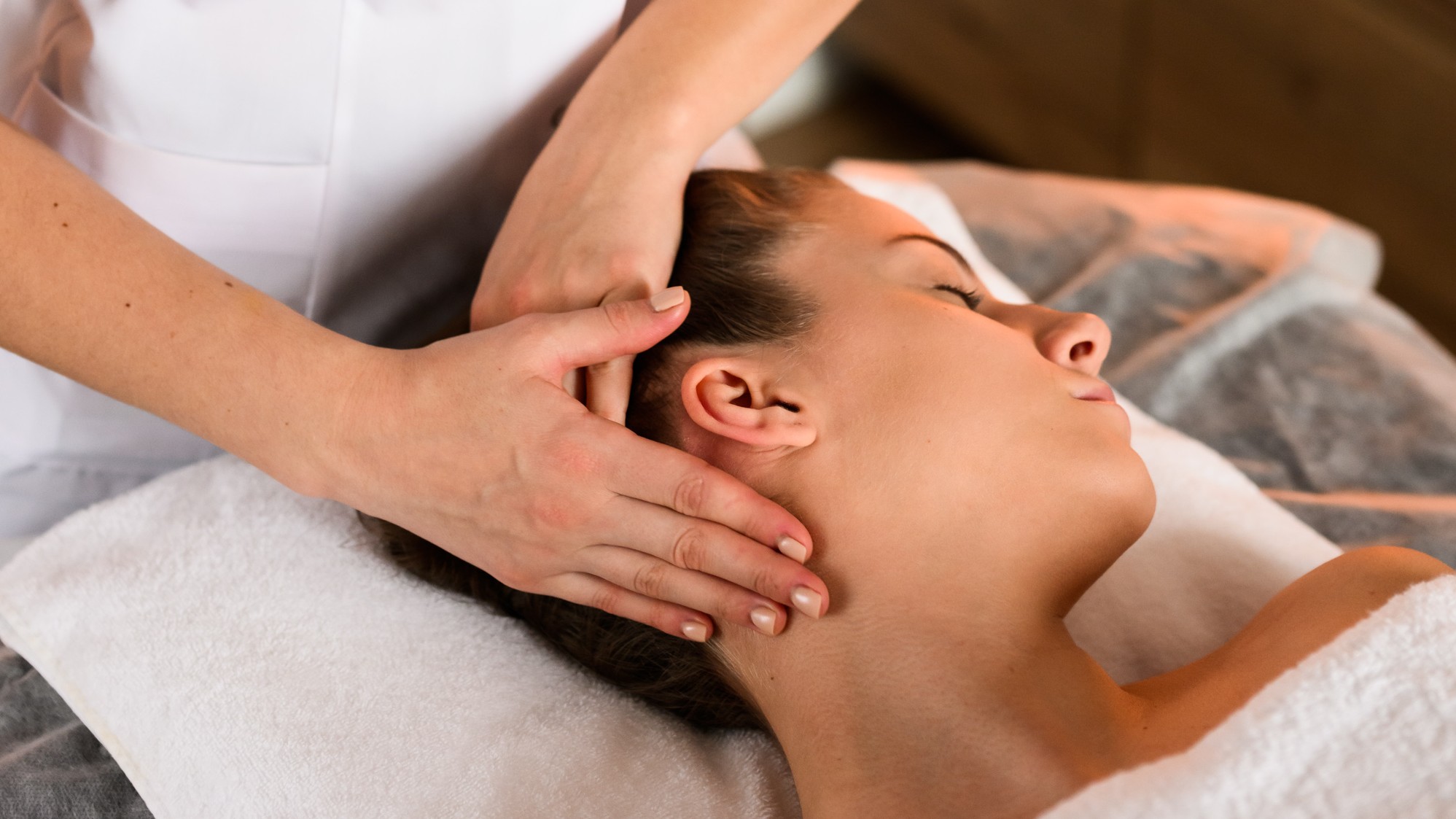
Before an Asian Head Massage, expect a short conversation about your preferences and any factors that could affect the treatment. Tell the therapist if you have a sensitive scalp, recent injury, migraine history, recent surgery, skin irritation, dizziness, or any medical condition that may matter. If you are unsure whether massage is appropriate, ask your doctor first.
During the treatment
During an Asian Head Massage, pressure should feel comfortable rather than painful. Stronger is not automatically better. If a technique feels sharp, causes dizziness, increases a headache, or creates tingling or numbness, say so immediately. A skilled therapist can reduce pressure, change position, avoid an area, or stop the treatment.
You may feel the therapist work through the scalp, around the temples, along the base of the skull, and into the neck or upper shoulders, depending on the service. The pace may be slow and repetitive. Some people feel deeply relaxed, while others simply notice that the upper body feels less guarded by the end. There is no requirement to fall asleep for an Asian Head Massage to feel worthwhile.
After the session
After an Asian Head Massage, give yourself a few quiet minutes before rushing back into activity. Drink water according to your normal needs, stand up gradually, and notice how your head and neck feel. You do not need a special detox routine. The more useful approach is to preserve some of the calm by avoiding an immediate return to frantic screen use if your schedule allows.
When massage should not be the first step
An Asian Head Massage is a wellness service, not an emergency treatment. Headache symptoms deserve particular care because serious conditions can occasionally present as head pain. Mayo Clinic advises emergency care for a sudden very severe headache, headache with fever and stiff neck, confusion, seizures, double vision, weakness, numbness, difficulty speaking, or a worsening headache after a head injury.
This safety boundary is part of good spa practice. An Asian Head Massage is best used for appropriate relaxation and everyday tension. When symptoms fall outside that category, medical evaluation should come first.
Frequently Asked Questions About Asian Head Massage in Paphos

Is an Asian Head Massage good for stress?
An Asian Head Massage can be a good relaxation choice when stress is showing up as a tight scalp, raised shoulders, neck stiffness, or difficulty switching off. The quiet setting and focused touch can create a useful pause from work and screens. It should be viewed as supportive self-care rather than treatment for a stress disorder. If stress is persistent or affecting daily functioning, combine relaxation practices with appropriate professional support.
Can an Asian Head Massage help a tension headache?
Some people find massage around the scalp, neck, and shoulders relaxing when they experience ordinary muscular tension, but an Asian Head Massage should not be presented as a proven cure for tension-type headache. Evidence specifically for Indian head massage in chronic tension-type headache has been limited. If headaches are frequent, severe, changing, or associated with warning signs, consult a healthcare professional before booking massage.
How often should I book an Asian Head Massage?
There is no medically required schedule for an Asian Head Massage. Frequency depends on your preference, budget, stress level, and how you respond to the experience. Some people book occasionally after intense work or travel, while others include massage in a broader wellness routine. If you feel you need very frequent sessions just to manage recurring pain, it is worth investigating the underlying cause with a healthcare professional.
Is an Asian Head Massage suitable after a long flight?
For many healthy travelers, a gentle Asian Head Massage can be a relaxing way to unwind after sitting for long periods. Tell the therapist if you have recent injuries, unusual swelling, significant medical conditions, recent procedures, or any concern related to travel. When in doubt, obtain medical advice first. The session should feel comfortable and should never worsen symptoms.
Do I need to wash my hair after an Asian Head Massage?
That depends on whether the Asian Head Massage uses oil or other scalp products. A dry session may leave the hair relatively unchanged, while an oil-based treatment may make you prefer to wash it afterward. Ask Six Senses about the treatment format when booking so you can plan around dinner, sightseeing, or other activities in Paphos.
What should I wear for an Asian Head Massage?
Comfortable clothing is usually best. Depending on the treatment style, access to the neck and upper shoulders may be helpful, but the spa should explain what is required and maintain appropriate draping and privacy. If you are coming directly from work or sightseeing, ask in advance whether you need to change. The aim is for the Asian Head Massage to feel easy and unhurried from the start.
Book an Asian Head Massage at Six Senses in Paphos
If you recognize the signs in this guide – a tight scalp after work, stiff shoulders after travel, stress held around the jaw and neck, difficulty switching off, or the constant urge to rub your temples – an Asian Head Massage may be a simple way to give those areas focused attention.
At Six Senses in Paphos, Cyprus, the aim is to create a relaxing experience for professionals, travelers, and anyone who wants time away from screens and daily pressure. An Asian Head Massage can fit naturally into a holiday wellness plan, a post-travel reset, or a self-care routine after a demanding week.
If your symptoms are ordinary tension and relaxation is your goal, this treatment can be a focused way to slow down. If your symptoms are new, severe, persistent, or medically concerning, seek appropriate healthcare first. Knowing the difference allows you to enjoy an Asian Head Massage for what it does best: creating dedicated time for comfort, calm, and relief from everyday head and neck tension.
Release head and neck tension with an Asian Head Massage at Six Senses in Paphos. Book your relaxing session today and give your mind and upper body a quiet moment to reset.