
No products in the cart.
Blogs, Consultation
Sports Massage Paphos: 6 Ways to Support Your Recovery
If you are looking for sports massage Paphos, this guide explains how focused bodywork can fit into a recovery routine after running, gym sessions, cycling, swimming or an active holiday.
Massage may help some people feel more comfortable after activity, but it does not replace rest, sensible training or medical care. At Six Senses Asian Massage & Spa in Kato Paphos, discuss your activity, preferred pressure and any health concerns with the team before booking.
What is sports massage and who is it for?
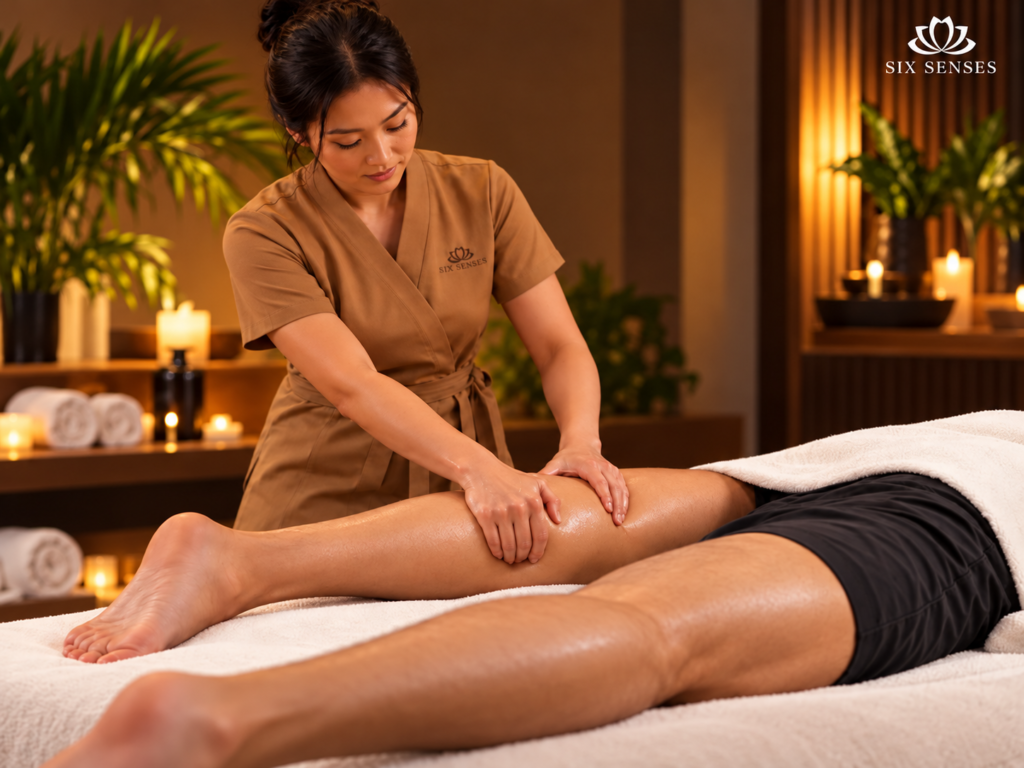
Sports massage focuses on muscles and soft tissues used during physical activity. A session may combine gliding strokes, kneading, compression, focused pressure and assisted stretching. The approach should reflect your recent activity, comfort and goals rather than applying deep pressure everywhere.
You do not need to be a professional athlete. Recreational runners, gym-goers, cyclists, swimmers, hikers and active visitors may choose this style of massage. A runner might want attention around the calves and thighs, while someone who lifts weights may prefer work around the shoulders, upper back or legs.
A systematic review of sports massage found small improvements in flexibility and delayed-onset muscle soreness (DOMS), but no evidence of direct improvement in strength, jumping, sprinting, endurance or fatigue. These findings support realistic expectations: possible comfort benefits, not guaranteed performance gains.
Six ways to support your recovery routine
The first and third points below concern potential benefits studied in research. The other points describe practical ways to plan and adapt a session; they are not six independently proven medical outcomes.
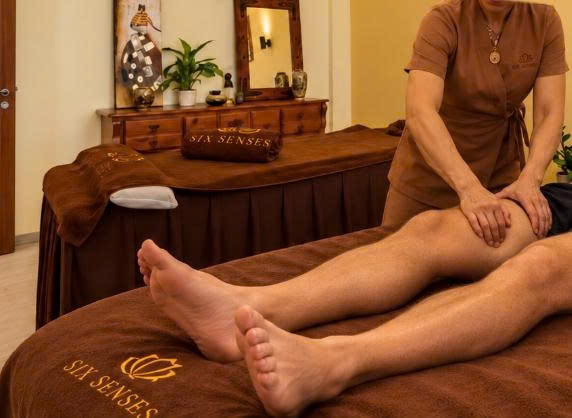
1. Manage perceived post-workout soreness
Hard or unfamiliar exercise can lead to soreness that appears later, often called DOMS. The review linked above found a modest benefit for this type of soreness. Individual responses vary, and massage cannot guarantee a shorter recovery period or readiness for your next workout.
For ordinary post-exercise soreness, discuss how recently you trained and how sensitive the area feels. Sudden, severe or unexplained pain should be assessed rather than treated as routine muscle soreness.
2. Focus the session on the areas you use most
Different activities place demands on different areas. Tell the therapist whether you have been running, cycling, lifting or walking for long periods, and identify where you feel tight. This helps allocate time to relevant muscle groups instead of following the same routine for every guest.
3. Complement your flexibility work
Research suggests a small flexibility benefit from sports massage, but that is not a substitute for a consistent mobility or exercise programme. Treat the session as an optional complement to your existing routine, with movements kept within a comfortable range.
4. Choose pressure that matches your current condition
Firm pressure is not automatically better. Ask for lighter work when an area is sensitive and tell the therapist if pressure feels sharp, burning or causes numbness. A useful session should adapt to your feedback, not require you to tolerate increasing pain.
5. Set aside time away from demanding activity
Booking a session can create a deliberate pause in a busy training week or active holiday. You may enjoy that downtime, although it does not prove that fatigue has resolved. Keep sleep, appropriate nutrition, hydration, rest and training-load management at the centre of your recovery plan.
6. Use your response to guide future bookings
Notice how comfortable you feel during the session and over the following day. If a technique leaves you unusually sore, discuss a gentler approach before another appointment. There is no universal frequency, and more massage is not automatically more useful.
Before or after training: when should you book?
Discuss your recent activity and your next planned workout with the therapist. Timing depends on your symptoms and how you respond to massage; the suggestions below are conversation starters, not a prescribed training schedule.
Before an event
If you choose massage before a race or important session, discuss a familiar, gentle approach. Avoid experimenting with unusually deep work immediately before an event. Massage does not replace your normal warm-up or preparation.
After activity
For normal post-exercise tightness, you may prefer a session after activity or on a recovery day. Pressure should reflect soreness and sensitivity. Do not assume all pain after exercise is DOMS; new swelling, severe pain or a suspected injury needs appropriate assessment.
On a rest day
A lighter day can leave time to see how you respond before your next demanding workout. Some people experience temporary tenderness after focused massage. Significant or worsening pain is not a desired result.
Between events or training sessions
Tell the therapist when you next need to be active. Conservative pressure and feedback are useful when there is little time between activities. Feeling looser does not establish that an injury has healed or that you are ready to compete.
What to expect at Six Senses
Before the session
Explain your sport or activity, recent workload, preferred pressure and the areas you want addressed. Mention previous injuries, surgery, medications and relevant health conditions. Ask the team about the treatment format and which areas can be included in your chosen duration.
During the session
The Sport Massage service describes techniques including effleurage (gliding strokes), kneading, wringing, rhythmic tapping and focused pressure. The combination and intensity should be adapted to your comfort. You can ask to change a technique, reduce pressure or stop.
After the session
Take a moment before standing up and notice how you feel. Follow your usual hydration and nutrition routine, and avoid using reduced discomfort as proof that an underlying problem has resolved. Seek appropriate advice if symptoms worsen or persist.
When should you avoid or delay sports massage?
Massage is not the right first step for every pain problem. If you have a recent traumatic injury, major swelling, severe weakness, unexplained severe pain, suspected infection or symptoms of a blood clot, seek medical assessment before booking. Do not ask a therapist to diagnose an injury through massage.
Tell the team about recent surgery, fractures, blood-thinning medication, osteoporosis, open wounds, pregnancy or other health concerns. These may affect suitability, pressure and the areas that can be worked on. NCCIH’s massage safety guidance discusses precautions and rare serious harms. Massage should not delay needed medical care.
Frequently asked questions
Is sports massage only for professional athletes?
No. Recreational exercisers and active visitors may choose it too. Your activity, comfort and health considerations matter more than your competition level.
Will it improve my athletic performance?
The review cited above does not support promising direct performance gains. Some people may experience less soreness or improved flexibility, but results vary.
Does sports massage have to hurt?
No. Pressure can be firm without becoming intolerable. Tell your therapist immediately if you feel sharp pain, burning or numbness.
How soon after exercise can I book?
There is no single interval that suits everyone. Explain when you exercised, how sore you feel and when you next plan to train. Suspected injury, severe pain or major swelling should be assessed before massage.
How long are the sessions?
Six Senses lists 60- and 90-minute Sport Massage options. View the service page for current prices and availability, or ask our team about the time needed for your preferred areas.
How often should I have a massage?
Frequency depends on your preferences, budget, training routine and response. Start with a session if suitable, assess how you feel and discuss future bookings rather than following a rigid schedule.
How do I book in Paphos?
Choose your duration on the Sport Massage page, or contact our team with your preferred appointment time and questions.
Book a Sport Massage in Kato Paphos
For a session tailored to your preferences, tell the Six Senses team what activities you do, where you feel tight and when you next plan to train. Sport Massage is offered for general wellbeing and comfort, not as a substitute for injury assessment or rehabilitation.
View Sport Massage prices and options or contact our team to discuss an appointment.
Before your first visit: read six things to know before booking Sport Massage for additional preparation tips.