
No products in the cart.
Blogs, Consultation
Thai Massage Paphos: 5 Traditional Techniques Worth Experiencing
If you are considering Thai massage in Paphos, understanding the techniques used can help you know what to expect before your first session. Traditional Thai massage combines rhythmic pressure, assisted stretching and gentle rocking to create a movement-focused experience that differs from a conventional oil massage.
In this guide, we explore five traditional Thai massage techniques, their potential benefits, what happens during a session and important safety considerations. If you would like to learn more about the treatment available locally, visit our Thai Massage service at Six Senses Asian Massage & Spa in Kato Paphos.
How Thai Massage Differs From Oil Massage
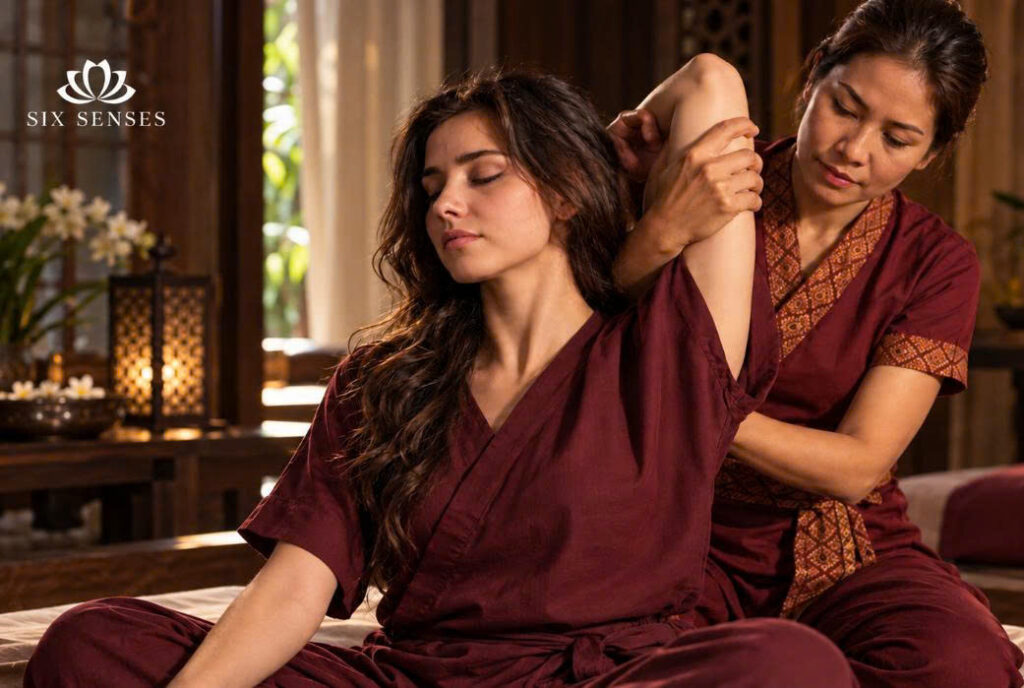
The main difference is movement. A therapist may guide your legs, hips, shoulders and spine through comfortable positions while applying pressure with the palms, thumbs, forearms or elbows. Traditional Thai massage is often performed on a mat or firm surface; individual spa formats may differ.
Traditional Thai massage is also known as Nuad Thai. UNESCO lists Nuad Thai as part of the Intangible Cultural Heritage of Humanity, recognizing its place within traditional Thai healthcare culture.
Modern Thai massage sessions in Paphos may vary by spa, but good practice should always adapt pressure and movement to the individual.
| Feature | Traditional Thai massage | Oil-based massage |
|---|---|---|
| Clothing | Usually loose, comfortable clothing | Usually involves skin contact with appropriate draping |
| Main methods | Pressure, stretching and rocking | Gliding strokes and kneading |
| Typical experience | Active, movement-focused | Often more flowing and relaxing |
5 Traditional Thai Massage Techniques Worth Experiencing
Traditional Thai massage techniques are usually combined in a flowing sequence.
1. Rhythmic palm and thumb pressure
The therapist applies steady pressure with the palms or thumbs to selected areas. Traditional theory describes pathways known as sen lines, while the practical experience is a controlled rhythm that can help address areas that feel tight. During a Thai massage session, pressure should feel controlled and comfortable rather than sharp or overwhelming.
2. Assisted yoga-style stretching
Your therapist may support a leg, open the hips, guide the shoulders or position the arms in a yoga-like stretch while you remain passive. Cleveland Clinic describes passive stretching and assisted yoga positions as central elements of Thai massage.
A skilled therapist should work within your comfortable range and never force a stretch beyond what feels manageable.
3. Compression with forearms, elbows and body weight
Broader contact points can distribute pressure over larger muscle groups. Controlled body weight also lets the therapist create steady compression without relying on muscular force alone.
The therapist should adjust the pressure immediately if it feels too strong or uncomfortable.
4. Gentle rocking and rhythmic movement
Small repeated rocking movements help create continuity between pressure work and stretching. The pace and range of movement should be adjusted to the individual.
This can make the session feel fluid rather than like a series of disconnected stretches.
5. Joint mobilization and passive range of motion
When choosing a Thai massage in Paphos, look for a treatment that adapts pressure and assisted stretching to your comfort and mobility.
The therapist may gently guide your ankles, hips or shoulders through a comfortable range of motion. These controlled movements can make the session feel more dynamic, but they should never involve forceful joint manipulation or movement beyond your comfort level.
What Are the Potential Benefits of Thai Massage in Paphos?
People choose traditional Thai massage for different reasons, including relaxation, supported stretching and a more movement-focused massage experience. Cleveland Clinic discusses potential flexibility and range-of-motion benefits, but individual results vary and these are not guaranteed outcomes.
Thai massage is a wellness treatment, not a substitute for medical assessment or treatment. The experience should be adapted to each person’s comfort, mobility and health considerations.
Mobility and flexibility
Assisted stretching can move the body through supported positions while you focus on breathing and relaxing. That makes assisted stretching attractive to people who feel tight through the hips, hamstrings, shoulders or back.
Relaxation without staying completely still
The treatment can be physically dynamic but still calming because pressure and movement are applied rhythmically. If you enjoy stretching as much as massage, Thai massage may provide a useful middle ground.
Support for everyday muscle tension
Travel, exercise and prolonged sitting can all contribute to a feeling of muscular tightness. Thai massage may help you feel looser, but it should not be presented as a cure for an injury or medical condition. Persistent, severe or unexplained pain deserves medical assessment.
The combination of rhythmic pressure and assisted stretching offers a different experience from a conventional oil massage.
What to Expect From a Thai Massage Session in Paphos
Before the treatment
Before your session, explain your goals, preferred pressure and any sensitive areas to your therapist. Mention previous injuries, recent surgery, pregnancy or health conditions that may affect stretching and pressure. If you have a condition that could make massage or assisted stretching unsuitable, seek advice from a healthcare professional beforehand.
Traditional Thai massage may involve lying on your back, side or front, as well as guided seated positions. Expect a combination of pressure, holding, rocking and assisted stretching rather than a series of continuous gliding strokes.
During the treatment
Your therapist should adjust the pressure and stretches to your comfort and mobility. Some movements may feel unfamiliar, particularly if you are new to Thai massage. You should never have to tolerate sharp pain, numbness or forced joint movement. Tell your therapist immediately if anything feels uncomfortable.
After the treatment
Stand up slowly and take a moment to notice how your body feels. Some people feel more relaxed or notice easier movement, while others may simply enjoy the overall massage experience. Responses vary from person to person.
A good Thai massage experience is not about how intense the treatment feels, but how well it matches your comfort, preferences and relaxation goals.
Who Should Take Extra Care Before a Thai Massage?
Thai massage involves pressure and assisted stretching, so it may not be suitable for everyone in the same way. People with recent injuries or surgery, significant osteoporosis, certain cardiovascular conditions or severe pain of unknown cause should seek appropriate medical advice before treatment. During pregnancy, consult a healthcare professional and choose a practitioner specifically trained in pregnancy massage.
Frequently Asked Questions About Thai Massage Paphos
What should I wear for a Thai massage in Paphos?
Wear loose, comfortable clothing that allows you to move your hips, knees and shoulders freely. Traditional Thai massage is commonly performed fully clothed. If you are unsure what to bring, contact Six Senses before your appointment.
Does traditional Thai massage use oil?
Traditional Thai massage is commonly performed without oil and uses pressure and assisted movement. Some spas offer variations that incorporate oil, so check the specific treatment description before booking.
Is Thai massage painful?
Thai massage can involve firm pressure and stretching, but you should not have to endure sharp pain. Ask your therapist to reduce the pressure or change a movement whenever you feel uncomfortable.
How is Thai massage different from deep tissue massage?
Thai massage combines pressure with assisted stretching, rocking and guided movement. Deep tissue massage generally focuses more on sustained pressure and strokes applied to deeper layers of muscle and other soft tissues. The exact techniques depend on the therapist and treatment style.
How long should a first Thai massage session be?
The right duration depends on your preferences and the available treatments. Six Senses offers 60- and 90-minute Thai Massage options. View the Thai Massage service for current prices and options, or ask our team which duration suits your preferences.
Can Thai massage improve flexibility?
Assisted stretching is one reason people choose Thai massage to support mobility. Cleveland Clinic discusses potential flexibility and range-of-motion benefits, although results vary from person to person.
For more information, read the Cleveland Clinic’s guide to Thai massage benefits.
Experience Thai Massage at Six Senses Spa
If you would like to experience traditional Thai massage during your stay in Paphos, Six Senses Asian Massage & Spa offers a welcoming space to relax and unwind. Contact our team to learn more about the treatment, discuss your preferences and find a suitable session for your visit.
Ready to experience Thai massage in Kato Paphos? View Thai Massage prices and options or contact our team to discuss your appointment.