
No products in the cart.
Consultation
Reflexology: 8 Pressure Points and What to Expect During a Session
Reflexology can feel deceptively simple: a therapist works with the feet, yet the session is designed around a detailed map of reflex areas. For people curious about pressure-point therapy, foot wellness, and a calmer spa ritual, reflexology offers a focused, noninvasive experience that may encourage relaxation and body awareness. It is best understood as a complementary wellness practice rather than a treatment for disease. Scientific evidence for specific organ-related effects remains limited, so a responsible session should combine comfort, clear communication, and realistic expectations.
In this guide, you will learn what reflexology is, how traditional foot maps are interpreted, eight commonly discussed pressure areas, what happens during a session, and when to seek medical advice before booking. If your goal is to unwind from the feet up, understanding the process can help you feel more comfortable before your first appointment.
What Is Reflexology and How Does It Work?
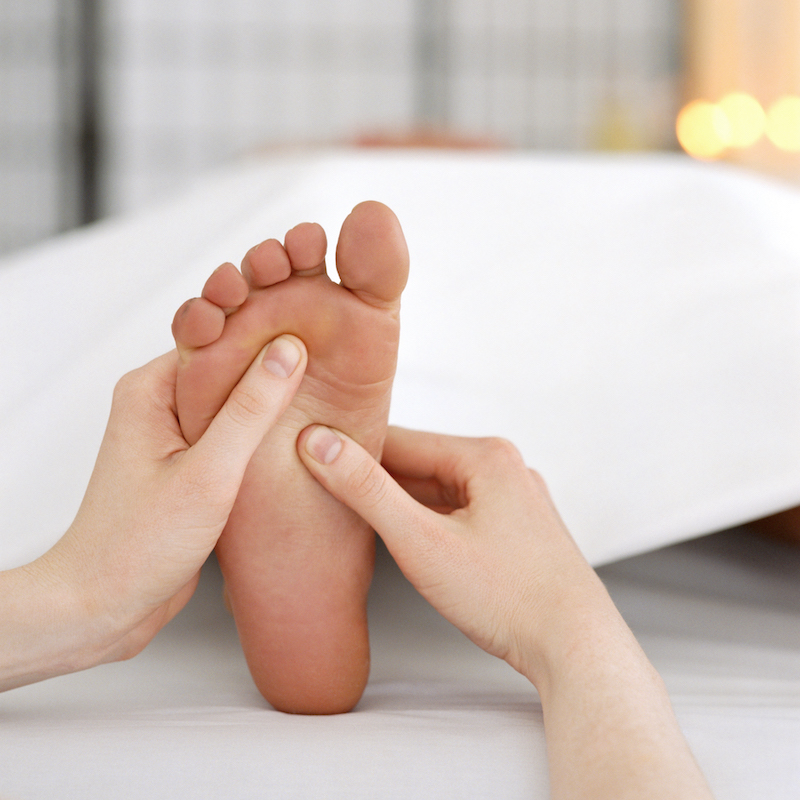
Reflexology is a complementary practice in which a practitioner applies varying levels of pressure to specific areas of the feet or, in some approaches, the hands. Traditional reflexology charts associate different foot zones with different parts of the body. These maps are used to guide where pressure is applied, but they should not be interpreted as anatomical diagrams or diagnostic tools.
The experience is different from a conventional foot massage. A relaxation massage often uses broader strokes, kneading, and soft-tissue work. Reflexology is usually more precise, with the thumb or fingers moving across defined zones in short presses, holds, or walking movements. The pressure should feel purposeful but manageable. Sharp pain, burning, numbness, or worsening discomfort is a reason to speak up immediately.
From an evidence-based perspective, the most defensible expectation is relaxation. The National Center for Complementary and Integrative Health notes that reflexology is based on the belief that specific points correspond with other parts of the body, while the proposed healing effects of those correspondences have not been proven. Cleveland Clinic similarly notes that research quality is limited and that some benefits may overlap with those of a traditional foot massage.
Reflexology: 8 Pressure Points and Foot Zones to Know
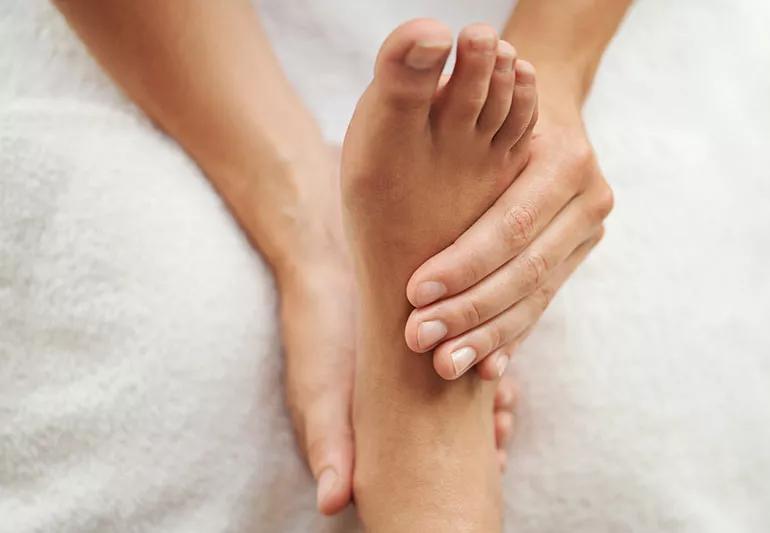
There is no single universal reflexology chart, and different schools may map the foot slightly differently. The eight areas below are best treated as commonly used traditional zones, not medically validated pathways. A trained reflexologist may work across several of them during one session rather than isolating a single point.
| Foot area | Traditional foot-map association | What the pressure may feel like |
|---|---|---|
| 1. Tips of the toes | Head and sinus region | Light pinching, rolling, or small circular pressure |
| 2. Center of the big toe | Head and pituitary area on traditional charts | Focused thumb pressure that should remain comfortable |
| 3. Ball of the foot | Chest and lung region | Broader thumb walking across the padded forefoot |
| 4. Inner edge of the foot | Spinal reflex line | Slow pressure tracing from the big-toe side toward the heel |
| 5. Upper arch | Upper abdominal and digestive region | Measured thumb walking or circular pressure |
| 6. Middle arch | Kidney and adrenal region on many charts | Steady pressure that may feel more noticeable in sensitive feet |
| 7. Inner heel | Pelvic and bladder region | Gentle sustained pressure around a firmer part of the foot |
| 8. Outer and lower heel | Lower back, hip, and sciatic region | Firm but controlled pressure around the heel border |
1. Toe tips and the traditional head zone
In many reflexology maps, the tips of the toes are associated with the head and sinus region. A reflexologist may use gentle squeezing, small rotations, or light pressure along the toe pads. Because toes can be sensitive, the technique should remain controlled rather than forceful.
2. Big toe center
The big toe is often given extra attention in reflexology because traditional charts place several head-related reflex areas there. Practitioners may apply a slow thumb press and release. This does not mean the big toe can diagnose or treat a neurological or hormonal condition; the mapping is part of the traditional framework of the practice.
3. Ball of the foot
The padded area beneath the toes is traditionally associated with the chest. Reflexology work here may involve thumb walking from the inner to the outer side of the foot. Many people simply experience this as a pleasantly firm forefoot massage, particularly after long periods of standing or walking.
4. Inner edge and spinal reflex line
Traditional reflexology charts commonly place the spinal reflex line along the inner edge of the foot. A practitioner may trace this border gradually, adjusting pressure around the arch. If you have acute foot pain, a recent sprain, or unexplained nerve symptoms, tell the therapist before any pressure is applied.
5. Upper arch
The upper arch is frequently mapped to the upper abdominal and digestive region in this practice. Pressure here is generally delivered through short thumb movements rather than deep digging. A session may feel soothing, but reflexology should not replace medical evaluation for persistent digestive symptoms.
6. Middle arch
Many reflexology charts place kidney and adrenal reflex areas around the middle arch. Practitioners may pause over sensitive spots, but tenderness in the foot is not proof of a problem in a corresponding organ. Treat sensitivity as feedback about comfort, not as a diagnosis.
7. Inner heel
The inner heel is traditionally linked with the pelvic region. Since the heel has denser tissue than the toes or arch, a reflexologist may use firmer sustained pressure. The session should still remain within your comfort range, especially if you have heel pain or plantar irritation.
8. Outer and lower heel
The outer and lower heel is commonly associated with the lower back, hips, and sciatic region on traditional foot maps. A therapist may combine thumb pressure with gentle mobilization of the foot. If you have radiating leg pain, weakness, numbness, or suspected sciatica, reflexology should be considered supportive relaxation only and not a substitute for medical assessment.
Interest becoming intention: Once you understand how these zones are used, a reflexology session becomes less mysterious. You can focus less on trying to interpret every pressure point and more on breathing, relaxing, and telling your therapist what level of pressure feels right.
What to Expect During a Reflexology Session
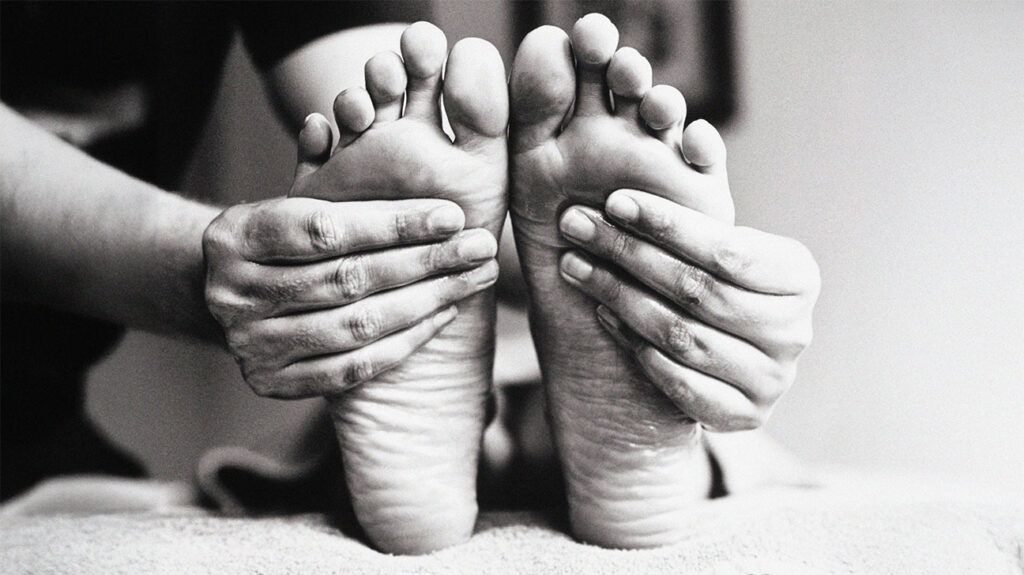
A professional reflexology appointment usually begins with a short conversation about your comfort, health history, current foot concerns, and goals for the session. You generally remain clothed and remove only your shoes and socks. The therapist may position you on a treatment table or in a reclining chair, then inspect the feet for visible irritation, wounds, swelling, or other reasons to modify the session.
Before pressure-point work begins
- You may be asked about recent injuries, circulation problems, pregnancy, skin conditions, medications, or ongoing medical care.
- Your feet may be cleansed or warmed before targeted pressure-point work begins.
- The therapist should explain pressure levels and invite you to speak up at any point.
During the session
The therapist may start at the toes and progress toward the arches and heels, or work according to a preferred reflexology sequence. Pressure may range from light to moderately firm. You might notice tender spots, warmth, tingling, or a strong sense of relaxation, but intense or sharp pain is not the goal. Some sessions last around 30 to 60 minutes, although spa protocols can vary.
After the session
Many people simply feel calm, rested, or more aware of their feet after reflexology. Give yourself a moment before standing, especially if you have been deeply relaxed. Drink water according to your normal thirst rather than because of claims that reflexology must remove toxins. If you notice persistent pain, unusual swelling, or neurological symptoms, seek appropriate medical advice.
For a more restorative experience, arrive a little early, silence your phone, and let the practitioner know whether you prefer quiet or conversation. Small choices can make the treatment feel more personal and unhurried.
Reflexology Benefits: What the Evidence Actually Says
Reflexology is often promoted for stress, sleep, pain, digestion, circulation, and many other concerns. The important distinction is between feeling better after a relaxing session and proving that a specific pressure point changes the function of a distant organ. Current evidence does not establish the traditional foot-to-organ maps as a medical mechanism.
Research has explored reflexology in areas such as anxiety, fatigue, pain, sleep quality, and supportive care. Some studies report positive outcomes, while reviews and health organizations continue to describe the overall evidence as limited or inconsistent. Study sizes, methods, comparison groups, and treatment protocols vary, making it difficult to draw strong conclusions.
For wellness-focused readers, a practical way to frame reflexology is as a structured form of touch and foot-focused relaxation. It may be enjoyable, calming, and compatible with a broader self-care routine. It should not be used to delay diagnosis, replace prescribed treatment, or make decisions about serious symptoms without a healthcare professional.
If your main goal is stress relief and a quieter mind, that expectation aligns better with what many people seek from a spa-based reflexology experience. At Six Senses Spa, the most meaningful outcome is not a promise to cure a condition, but a thoughtfully guided moment of rest, comfort, and renewed attention to the body.
Reflexology Safety: Who Should Check With a Healthcare Professional?
Reflexology is noninvasive, but not every foot is suitable for firm pressure on every day. Speak with a healthcare professional before booking if you have a history of blood clots, significant circulation problems, severe neuropathy, uncontrolled swelling, recent fractures, acute gout, open wounds, active foot infections, or another condition that makes pressure on the feet risky.
Pregnant guests should tell both their healthcare professional and practitioner before treatment. Pregnancy is not a reason to make dramatic claims about specific reflex points, but it is a reason to communicate clearly and use an appropriately modified approach.
During the appointment, stop or reduce pressure if you experience sharp pain, burning, numbness, dizziness, or discomfort that feels wrong. A skilled reflexology practitioner should welcome feedback. Comfort is not a test of endurance, and deeper pressure is not automatically more effective.
How to Prepare for a Better Reflexology Experience
You do not need elaborate preparation for reflexology. Wear comfortable clothing, avoid arriving rushed, and mention any foot sensitivity before the session begins. If you have a specific wellness goal, such as unwinding after travel or giving tired feet focused attention, share that goal without expecting a pressure point to function like a medical treatment.
- Arrive with clean, dry feet and avoid applying heavy products immediately beforehand.
- Tell the therapist about cuts, blisters, recent pedicures, sprains, or areas that are unusually tender.
- Choose a pressure level that feels steady and comfortable.
- Breathe naturally and let your legs remain relaxed instead of bracing against pressure.
- After reflexology, stand up slowly and notice how your feet feel before walking away.
If you are comparing spa treatments, consider whether you want whole-body soft-tissue work or more concentrated foot pressure. A classic massage may suit widespread muscular tension, while this approach is a better match when you want a focused foot ritual and a quieter, more contained treatment experience.
Learn more: reflexology and current scientific evidence
Frequently Asked Questions
Does the treatment hurt?
The pressure may feel firm or slightly tender in some areas, but it should not be sharply painful. Tell the practitioner if the pressure feels too intense. A comfortable session can still use focused pressure without forcing the foot.
How long does a reflexology session take?
Many appointments last about 30 to 60 minutes, although spa protocols vary. A shorter session may focus almost entirely on the feet, while a longer ritual may include preparation or complementary relaxation techniques. Check the treatment description before booking.
Is it the same as foot massage?
No. Foot massage generally works with muscles and soft tissues through rubbing, kneading, stretching, and broad pressure. The practice uses more targeted pressure on mapped foot zones. Both may feel relaxing, but their techniques and traditional rationale are different.
Can foot pressure diagnose health problems?
No. Tenderness in a foot zone should not be interpreted as proof of disease in a corresponding organ. Traditional foot charts are not diagnostic maps. Persistent or concerning symptoms require assessment by an appropriate healthcare professional.
How often should I book a session?
There is no evidence-based universal schedule for this treatment. Frequency depends on your preferences, comfort, budget, and wellness routine. If you enjoy it mainly for relaxation, choose a rhythm that feels sustainable rather than assuming more sessions are medically necessary.
Can I try it if I am pregnant?
Pregnant guests should discuss massage and pressure-point foot therapy with their healthcare professional and inform the practitioner before treatment. Modifications may be appropriate depending on the stage of pregnancy, symptoms, and medical history. Avoid relying on the treatment to induce labor or manage pregnancy complications without medical guidance.
What should I do after a session?
Take a moment before standing, walk carefully, and notice how your feet feel. Normal hydration and a relaxed schedule can complement the experience. If a session causes lasting pain, swelling, numbness, or another concerning symptom, seek medical advice.
Step Into Deeper Relaxation With Six Senses Spa
Understanding the practice helps you approach the treatment with the right balance of curiosity and realistic expectations. The traditional foot map gives the session structure, while the real-time experience depends on skilled touch, appropriate pressure, communication, and your ability to settle into the moment.
If your feet feel tired, your mind feels busy, or you simply want a focused pause from the pace of the day, a focused foot ritual can offer a calm place to begin. Step into deeper relaxation from the feet up and book your reflexology experience at Six Senses Spa.
This article is for informational and wellness education purposes. This is a complementary practice and is not a substitute for medical diagnosis or treatment.